Latest YouTube Video

Showing posts with label NASA. Show all posts

Sunday, April 22, 2018

Meteor Over Crater Lake


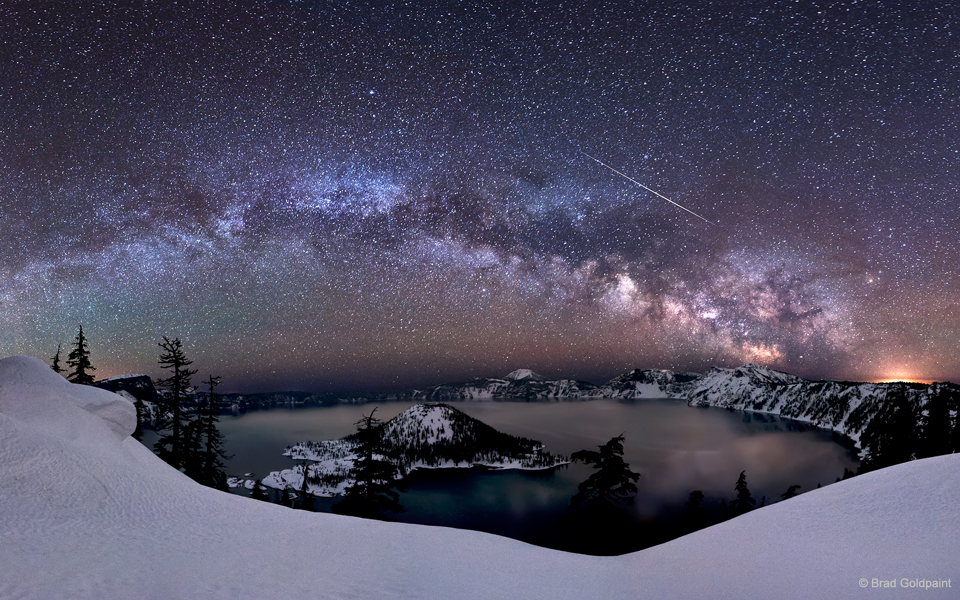
Did you see it? One of the more common questions during a meteor shower occurs because the time it takes for a meteor to flash is typically less than the time it takes for a head to turn. Possibly, though, the glory of seeing bright meteors shoot across and knowing that they were once small granules on another world might make it all worthwhile, even if your observing partner(s) could not share in every particular experience. Peaking late tonight, a dark sky should enable the Lyrids meteor shower to exhibit as many as 20 visible meteors per hour from some locations. In the featured composite of nine exposures taken during the 2012 shower, a bright Lyrid meteor streaks above picturesque Crater Lake in Oregon, USA. Snow covers the foreground, while the majestic central band of our home galaxy arches well behind the serene lake. Other meteor showers this year -- and every year -- include the Perseids in mid-August and the Leonids in mid-November. via NASA https://ift.tt/2qVMv8f


Saturday, April 21, 2018

TESS Launch Close Up


NASA's Transiting Exoplanet Survey Satellite (TESS) began its search for planets orbiting other stars by leaving planet Earth on April 18. The exoplanet hunter rode to orbit on top of a Falcon 9 rocket. The Falcon 9 is so designated for its 9 Merlin first stage engines seen in this sound-activated camera close-up from Space Launch Complex 40 at Cape Canaveral Air Force Station. In the coming weeks, TESS will use a series of thruster burns to boost it into a high-Earth, highly elliptical orbit. A lunar gravity assist maneuver will allow it to reach a previously untried stable orbit with half the orbital period of the Moon and a maximum distance from Earth of about 373,000 kilometers (232,000 miles). From there, TESS will carry out a two year survey to search for planets around the brightest and closest stars in the sky. via NASA https://ift.tt/2vChwDG

Friday, April 20, 2018

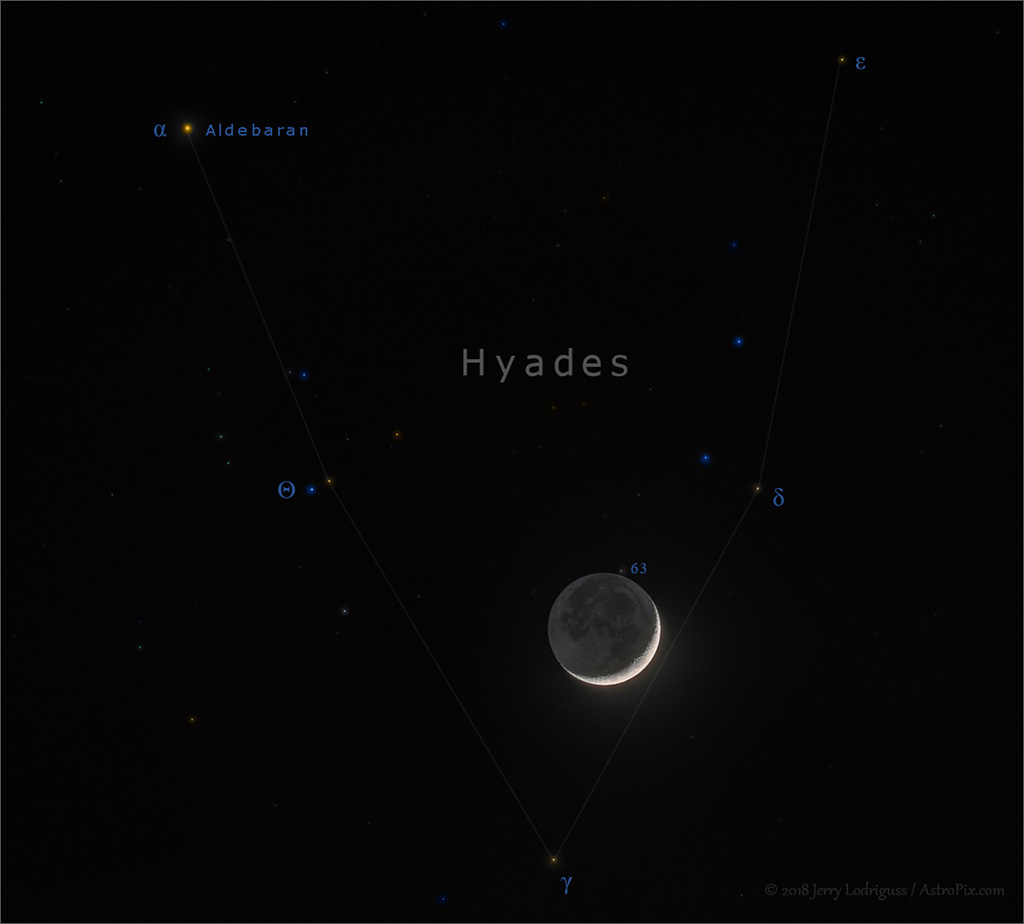
Moon in the Hyades


Have you seen the Moon lately? On April 18, its waxing sunlit crescent moved through planet Earth's night across a background of stars in the Hyades. Anchored by bright star Aldebaran, the nearby, V-shaped star cluster and complete lunar orb appear in this telephoto image. The engaging skyview is actually digitally composed from a series of varying exposures. Recorded in 1/60th of a second, the shortest in the series captures the Moon's bright crescent in sharp detail. Longer exposures, ranging up to 15 seconds, capture fainter background stars as well as earthshine, visible to the eye as the earthlit lunar night side. via NASA https://ift.tt/2Hf5SUw

Thursday, April 19, 2018

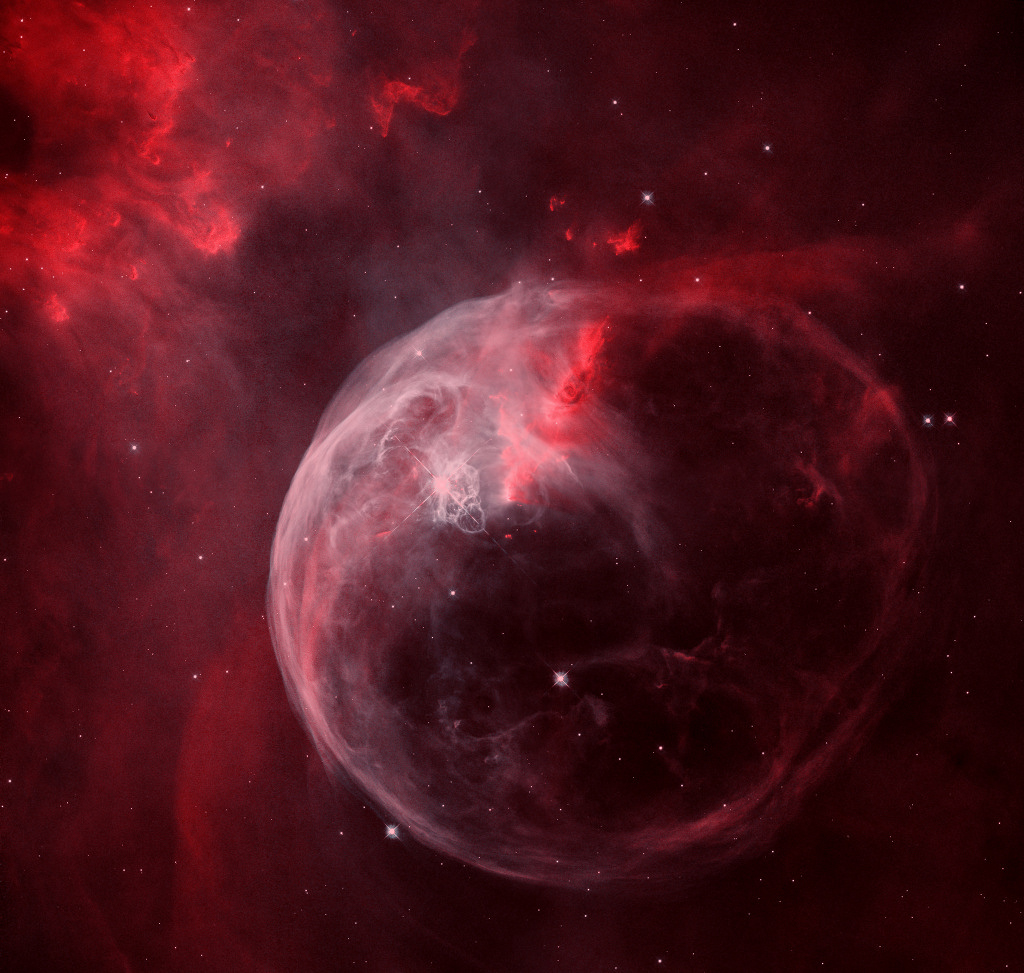
NGC 7635: The Bubble Nebula


Blown by the wind from a massive star, this interstellar apparition has a surprisingly familiar shape. Cataloged as NGC 7635, it is also known simply as The Bubble Nebula. Although it looks delicate, the 7 light-year diameter bubble offers evidence of violent processes at work. Above and left of the Bubble's center is a hot, O-type star, several hundred thousand times more luminous and some 45 times more massive than the Sun. A fierce stellar wind and intense radiation from that star has blasted out the structure of glowing gas against denser material in a surrounding molecular cloud. The intriguing Bubble Nebula and associated cloud complex lie a mere 7,100 light-years away toward the boastful constellation Cassiopeia. This sharp, tantalizing view of the cosmic bubble is a composite of Hubble Space Telescope image data from 2016, reprocessed to present the nebula's intense narrowband emission in an approximate true color scheme. via NASA https://ift.tt/2HBnKIw

Wednesday, April 18, 2018

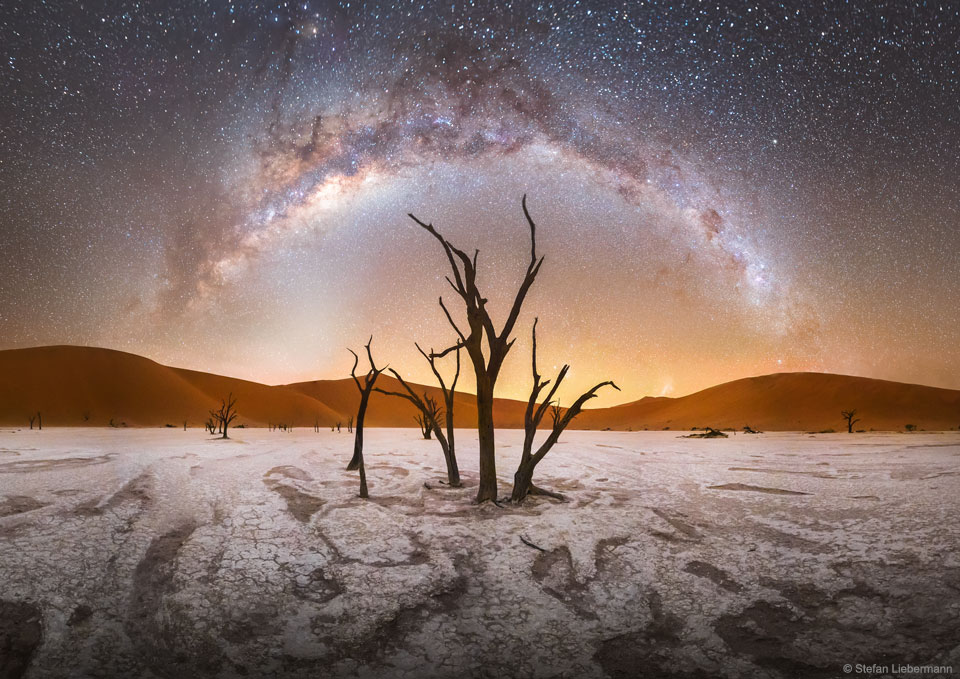
Milky Way over Deadvlei in Namibia


What planet is this? It is the only planet currently known to have trees. The trees in Deadvlei, though, have been dead for over 500 years. Located in Namib-Naukluft Park in Namibia (Earth), saplings grew after rainfall caused a local river to overflow, but died after sand dunes shifted to section off the river. High above and far in the distance, the band of our Milky Way Galaxy forms an arch over a large stalk in this well-timed composite image, taken last month. The soil of white clay appears to glow by reflected starlight. Rising on the left, under the Milky Way's arch, is a band of zodiacal light -- sunlight reflected by dust orbiting in the inner Solar System. On the right, just above one of Earth's larger sand dunes, an astute eye can find the Large Magellanic Cloud, a satellite galaxy of our galaxy. Finding the Small Magellanic Cloud in the featured image, though, is perhaps too hard. via NASA https://ift.tt/2J4DFMA

Monday, April 16, 2018

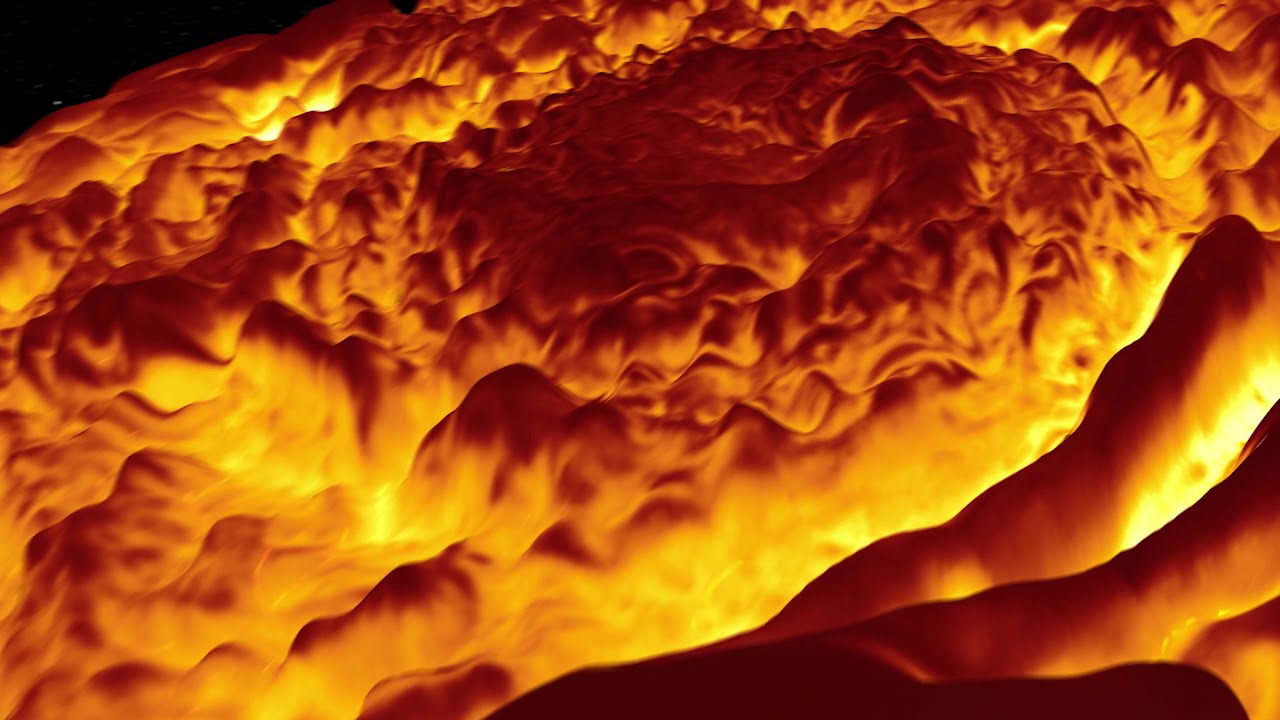
Flyover of Jupiters North Pole in Infrared


What would it look like to fly over the North Pole of Jupiter? A fictional animation made from real images and data captured by NASA's Juno spacecraft shows an answer. Since the pole is presently in shadow, the video uses infrared light emitted by Jupiter -- specifically an infrared color where the hottest features glows the brightest. As the animation starts, Juno zooms in on the enormous world. Soon, one of the eight cyclones orbiting the North Pole is featured. One by one, all eight cyclones circling the pole are inspected, each the size of an entire continent on Earth, and each containing bumpy and fragmented spiral walls. The virtual trip ends with a zoom out. Studying Jovian cyclones helps humanity to better understand dangerous storm systems that occur here on Earth. Juno has recently concluded another close pass by Jupiter -- Perijove 12 -- and seems healthy enough to complete several more of the two-month orbits. via NASA https://ift.tt/2EM34s1

Saturday, April 14, 2018

Martian Chiaroscuro


Deep shadows create dramatic contrasts between light and dark in this high-resolution close-up of the martian surface. Recorded on January 24, 2014 by the HiRISE camera onboard the Mars Reconnaissance Orbiter, the scene spans about 1.5 kilometers. From 250 kilometers above the Red Planet the camera is looking down at a sand dune field in a southern highlands crater. Captured when the Sun was about 5 degrees above the local horizon, only the dune crests were caught in full sunlight. A long, cold winter is coming to the southern hemisphere and bright ridges of seasonal frost line the martian dunes. via NASA https://ift.tt/2JJcIPN

Thursday, April 12, 2018

M22 and the Wanderers


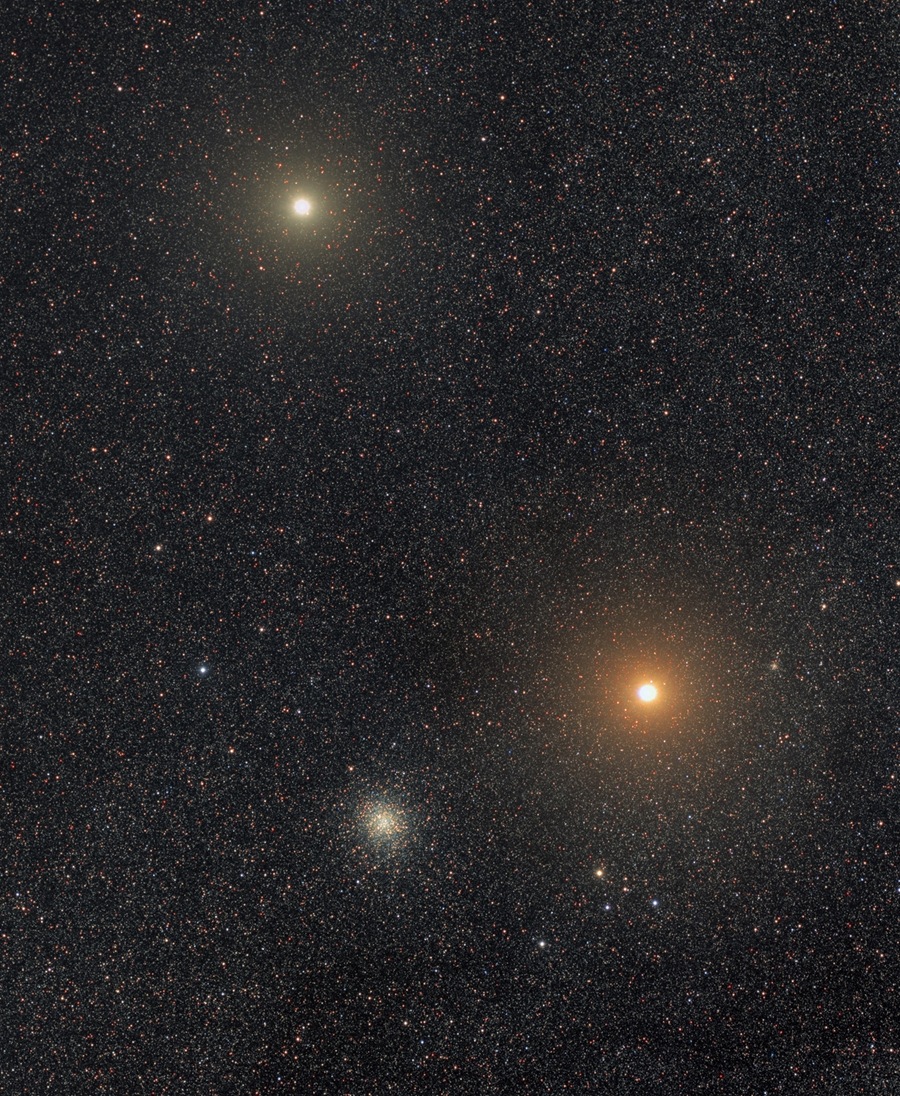
Wandering through the constellation Sagittarius, bright planets Mars and Saturn appeared together in early morning skies over the last weeks. They are captured in this 3 degree wide field-of-view from March 31 in a close celestial triangle with large globular star cluster Messier 22. Of course M22 (bottom left) is about 10,000 light-years distant, a massive ball of over 100,000 stars much older than our Sun. Pale yellow and shining by reflected sunlight, Saturn (on top) is about 82 light-minutes away. Look carefully and you can spot large moon Titan as a pinpoint of light at about the 5 o'clock position in the glare of Saturn's overexposed disk. Slightly brighter and redder Mars is 9 light-minutes distant. While both planets are moving on toward upcoming oppositions, by July Mars will become much brighter still, with good telescopic views near its 2018 opposition a mere 3.2 light-minutes from planet Earth. via NASA https://ift.tt/2qrEM27

Monday, April 9, 2018

The Sun Unleashed: Monster Filament in Ultraviolet


One of the most spectacular solar sights is an explosive flare. In 2011 June, the Sun unleashed somewhat impressive, medium-sized solar flare as rotation carried active regions of sunpots toward the solar limb. That flare, though, was followed by an astounding gush of magnetized plasma -- a monster filament seen erupting at the Sun's edge in this extreme ultraviolet image from NASA's Solar Dynamics Observatory. Featured here is a time-lapse video of that hours-long event showing darker, cooler plasma raining down across a broad area of the Sun's surface, arcing along otherwise invisible magnetic field lines. An associated coronal mass ejection, a massive cloud of high energy particles, was blasted in the general direction of the Earth,and made a glancing blow to Earth's magnetosphere. via NASA https://ift.tt/2qiokjX

Sunday, April 8, 2018

NGC 6960: The Witchs Broom Nebula


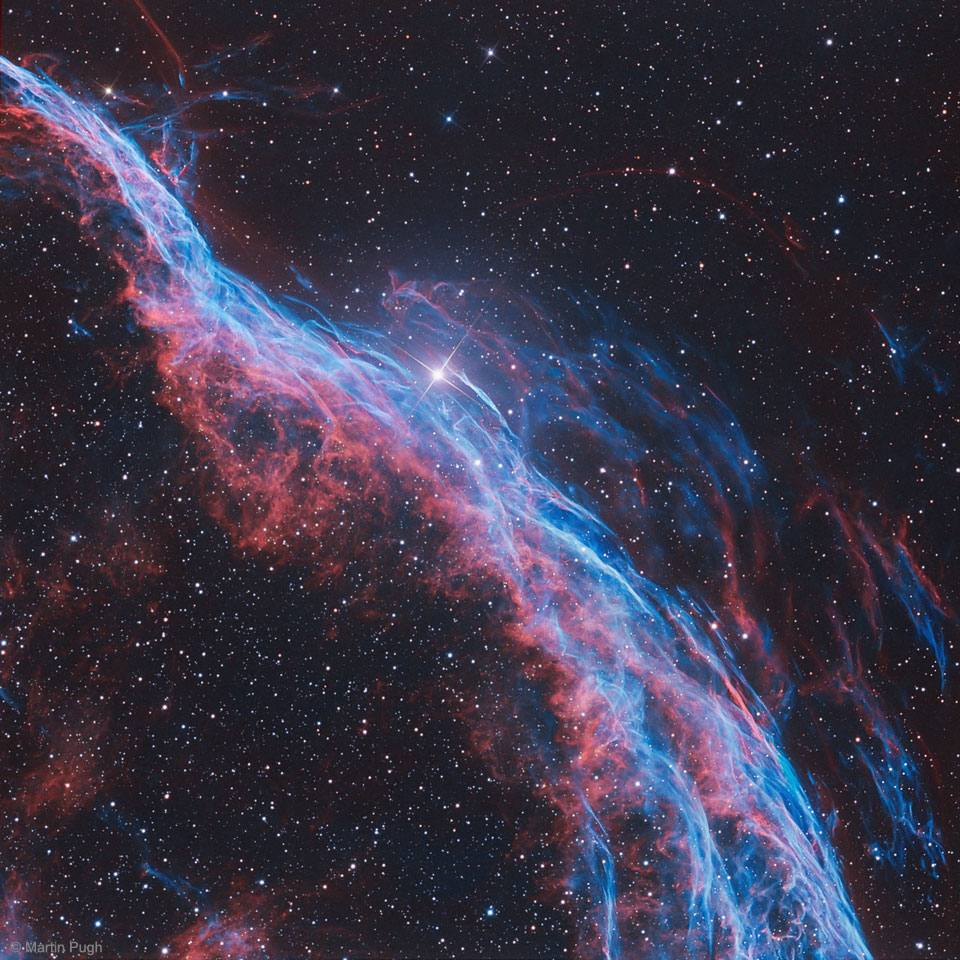
Ten thousand years ago, before the dawn of recorded human history, a new light would have suddenly have appeared in the night sky and faded after a few weeks. Today we know this light was from a supernova, or exploding star, and record the expanding debris cloud as the Veil Nebula, a supernova remnant. This sharp telescopic view is centered on a western segment of the Veil Nebula cataloged as NGC 6960 but less formally known as the Witch's Broom Nebula. Blasted out in the cataclysmic explosion, the interstellar shock wave plows through space sweeping up and exciting interstellar material. Imaged with narrow band filters, the glowing filaments are like long ripples in a sheet seen almost edge on, remarkably well separated into atomic hydrogen (red) and oxygen (blue-green) gas. The complete supernova remnant lies about 1400 light-years away towards the constellation Cygnus. This Witch's Broom actually spans about 35 light-years. The bright star in the frame is 52 Cygni, visible with the unaided eye from a dark location but unrelated to the ancient supernova remnant. via NASA https://ift.tt/2HgwHV1

Saturday, April 7, 2018

Painting with Jupiter


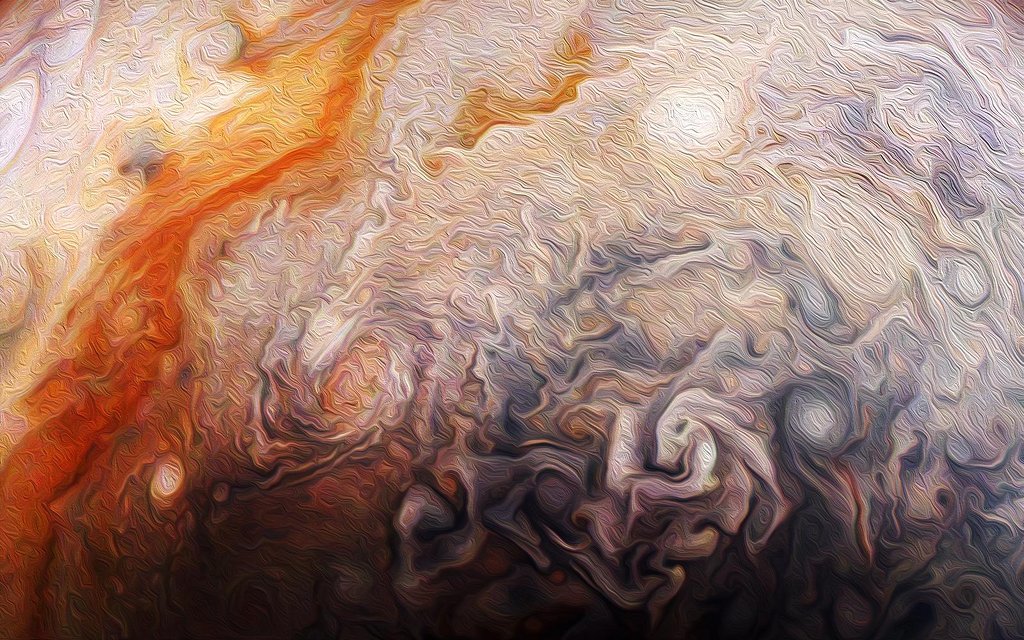
Brush strokes of Jupiter's signature atmospheric bands and vortices form this planetary post-impressionist work of art. The creative image uses actual data from the Juno spacecraft's JunoCam. To paint on the digital canvas, a image with light and dark tones was chosen for processing and an oil-painting software filter applied. The image data was captured during perijove 10, Juno's December 16, 2017 close encounter with the solar system's ruling gas giant. At the time the spacecraft was cruising about 13,000 kilometers above northern Jovian cloud tops. via NASA https://ift.tt/2qblm1n

Thursday, April 5, 2018

NGC 289: Swirl in the Southern Sky


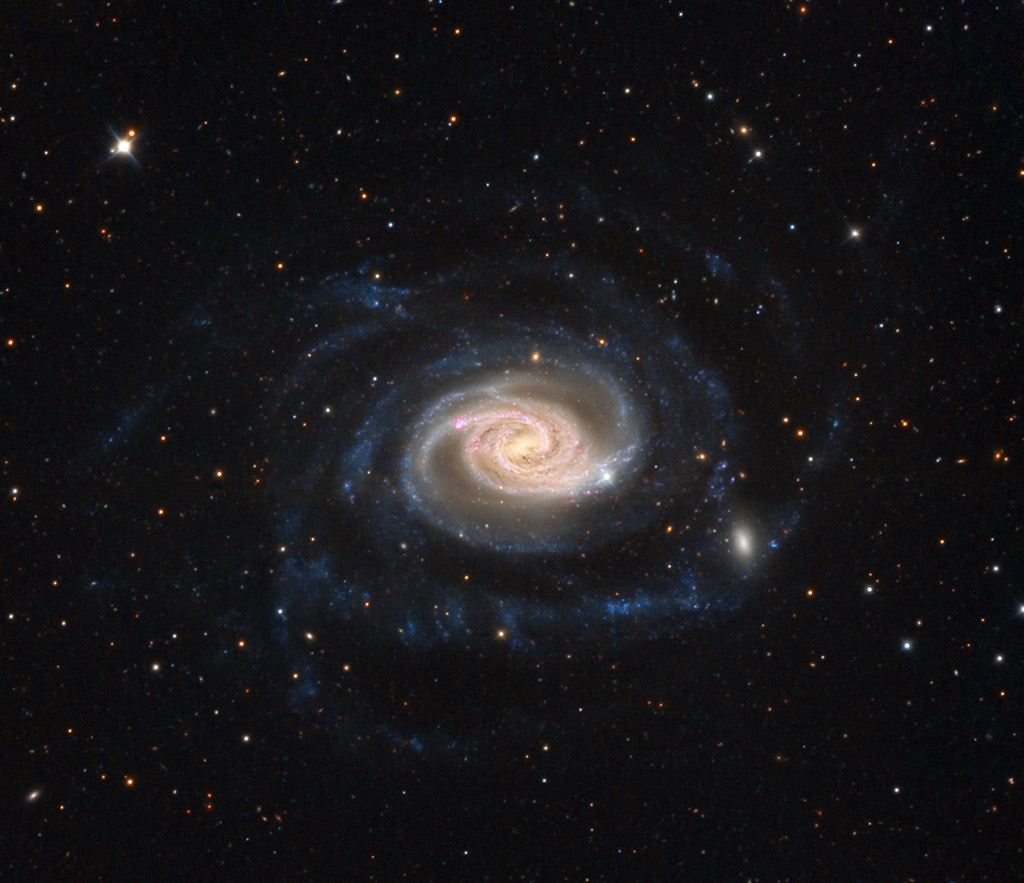
About 70 million light-years distant, gorgeous spiral galaxy NGC 289 is larger than our own Milky Way. Seen nearly face-on, its bright core and colorful central disk give way to remarkably faint, bluish spiral arms. The extensive arms sweep well over 100 thousand light-years from the galaxy's center. At the lower right in this sharp, telescopic galaxy portrait the main spiral arm seems to encounter a small, fuzzy elliptical companion galaxy interacting with enormous NGC 289. Of course the spiky stars are in the foreground of the scene. They lie within the Milky Way toward the southern constellation Sculptor. via NASA https://ift.tt/2GWVQXi

Tuesday, April 3, 2018

The Milky Way over the Seven Strong Men Rock Formations


You may have heard of the Seven Sisters in the sky, but have you heard about the Seven Strong Men on the ground? Located just west of the Ural Mountains, the unusual Manpupuner rock formations are one of the Seven Wonders of Russia. How these ancient 40-meter high pillars formed is yet unknown. The persistent photographer of this featured image battled rough terrain and uncooperative weather to capture these rugged stone towers in winter at night, being finally successful in February of 2014. Utilizing the camera's time delay feature, the photographer holds a flashlight in the foreground near one of the snow-covered pillars. High above, millions of stars shine down, while the band of our Milky Way Galaxy crosses diagonally down from the upper left. via NASA https://ift.tt/2q0stJ0

Saturday, March 31, 2018

Twilight in a Western Sky


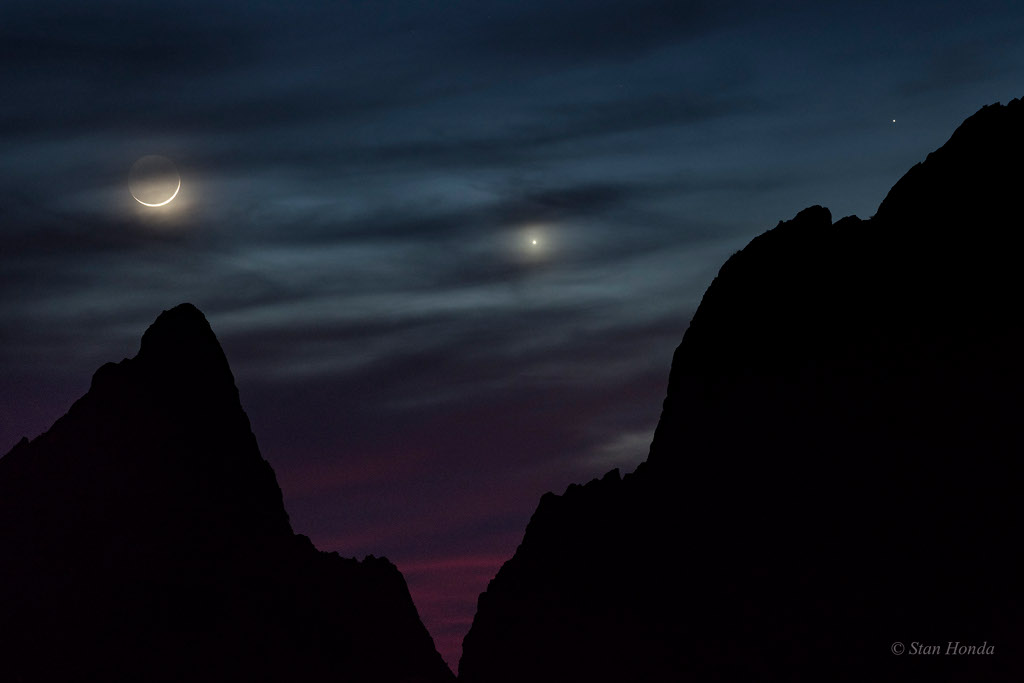
A slender crescent Moon and inner planets Venus and Mercury never wander far from the Sun in planet Earth's skies. In the fading evening twilight of March 18, they line up near the western horizon in this atmospheric skyscape. While the celestial scene was enjoyed around the world, this photo captures the trio, with fainter Mercury at the far right, above the crags of Big Bend National Park in southwest Texas. Tonight the Moon will be full though, and rise opposite the Sun. Look for it high in the sky at midnight, near bright star Spica. via NASA https://ift.tt/2uAl3ls

Thursday, March 29, 2018

NGC 2023 in the Horsehead s Shadow


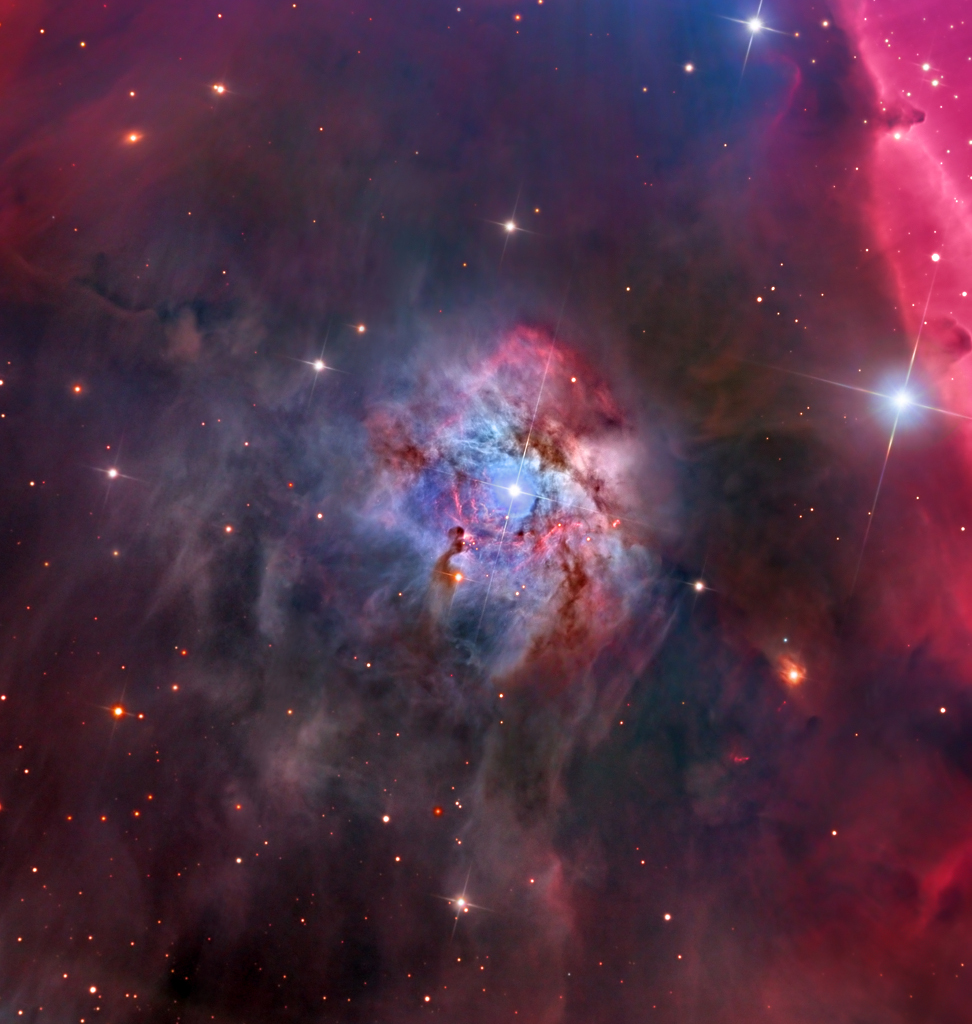
Carved by a bright young star in Orion's dusty molecular clouds, NGC 2023 is often overlooked in favor of the nearby dramatic silhouette of the Horsehead Nebula. In its own right it is seen as a beautiful star forming emission and reflection nebula though, a mere 1500 light-years distant. Surprisingly colorful and complex filaments are detailed in this rare NGC 2023 portrait. Scattered points of emission are also from the region's Herbig-Haro objects, associated with the energetic jets from newborn stars. The sharp telescopic view spans about 10 light-years at the estimated distance of NGC 2023. Off the right edge of the frame lies the more familiar cosmic Horsehead. via NASA https://ift.tt/2GREmZP

Sunday, March 25, 2018

Announcing Nova Carinae 2018


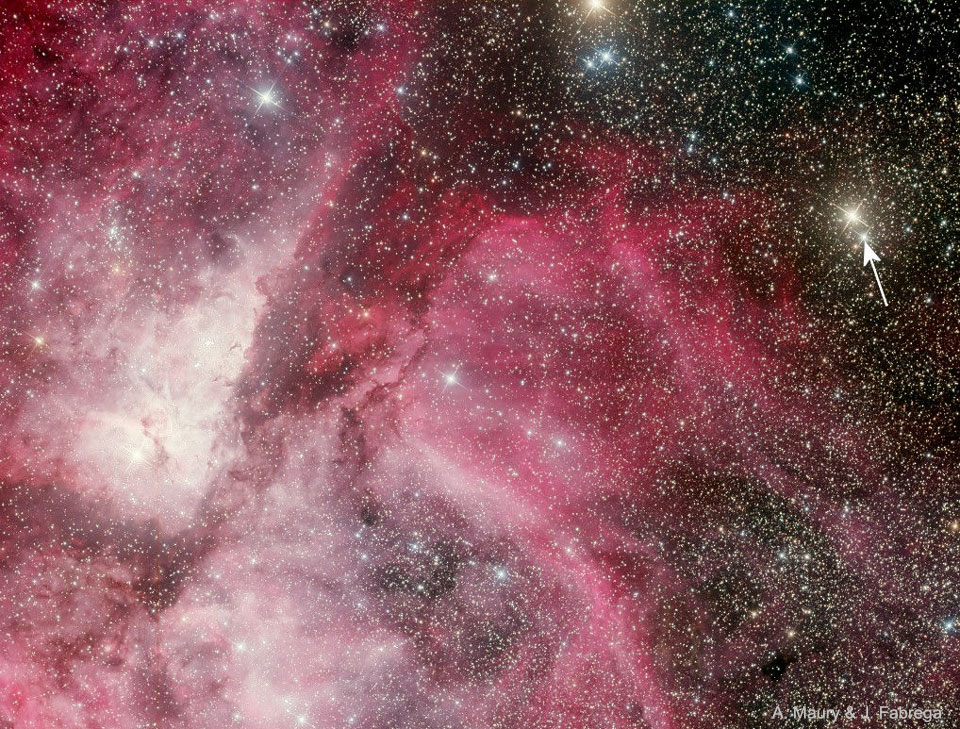
How bright will Nova Carinae 2018 become? The new nova was discovered only last week. Although novas occur frequently throughout the universe, this nova, cataloged as ASASSN-18fv, is so unusually bright in the skies of Earth that it is now easily visible through binoculars in the southern hemisphere. Identified by the arrow, the nova occurs near the direction of the picturesque Carina Nebula. A nova is typically caused by a thermonuclear explosion on the surface of a white dwarf star that is accreting matter from a binary companion, although details of this outburst are currently unknown. Both professional and amateur astronomers will be monitoring this unusual stellar outburst in the coming weeks, looking to see how Nova Carinae 2018 evolves, including whether it becomes bright enough to be visible to the unaided eye. via NASA https://ift.tt/2IO1TM1

Saturday, March 24, 2018

NGC 602 and Beyond


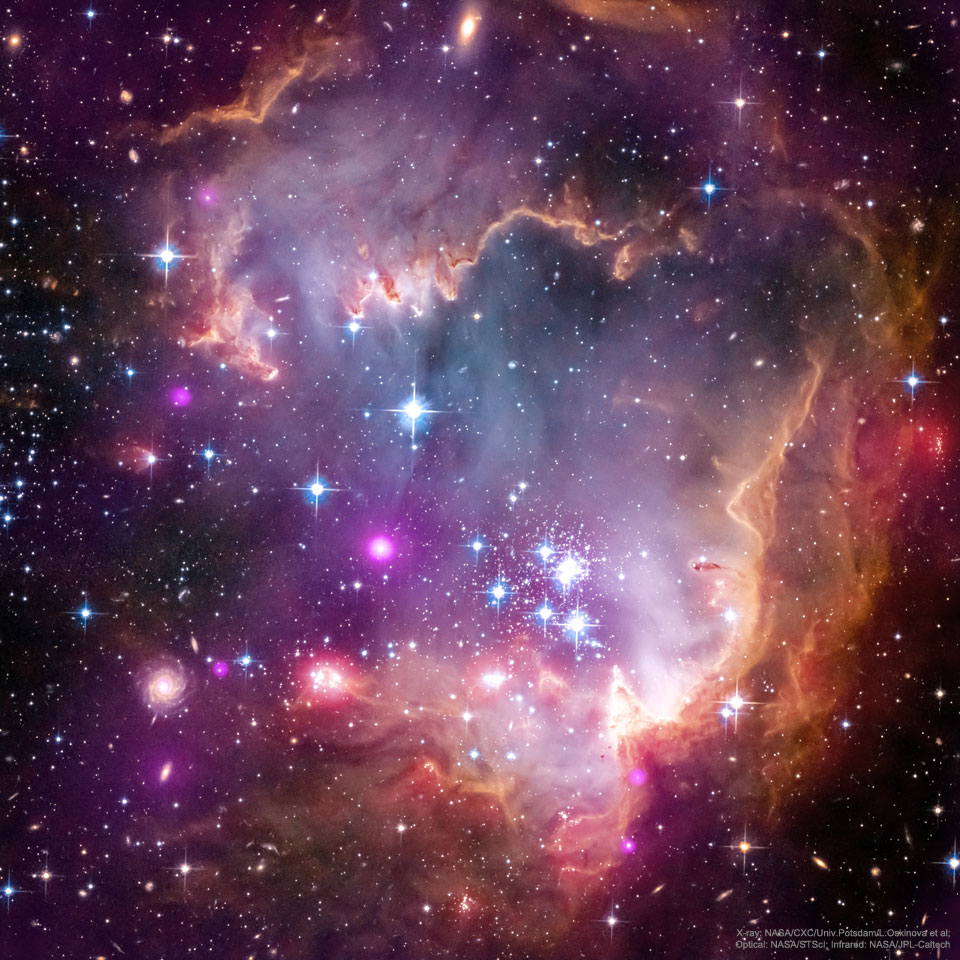
Near the outskirts of the Small Magellanic Cloud, a satellite galaxy some 200 thousand light-years distant, lies 5 million year young star cluster NGC 602. Surrounded by natal gas and dust, NGC 602 is featured in this stunning Hubble image of the region, augmented by images in the X-ray by Chandra, and in the infrared by Spitzer. Fantastic ridges and swept back shapes strongly suggest that energetic radiation and shock waves from NGC 602's massive young stars have eroded the dusty material and triggered a progression of star formation moving away from the cluster's center. At the estimated distance of the Small Magellanic Cloud, the Picture spans about 200 light-years, but a tantalizing assortment of background galaxies are also visible in this sharp multi-colored view. The background galaxies are hundreds of millions of light-years or more beyond NGC 602. via NASA https://ift.tt/2G66Qhr

Thursday, March 22, 2018

NGC 253: Dusty Island Universe


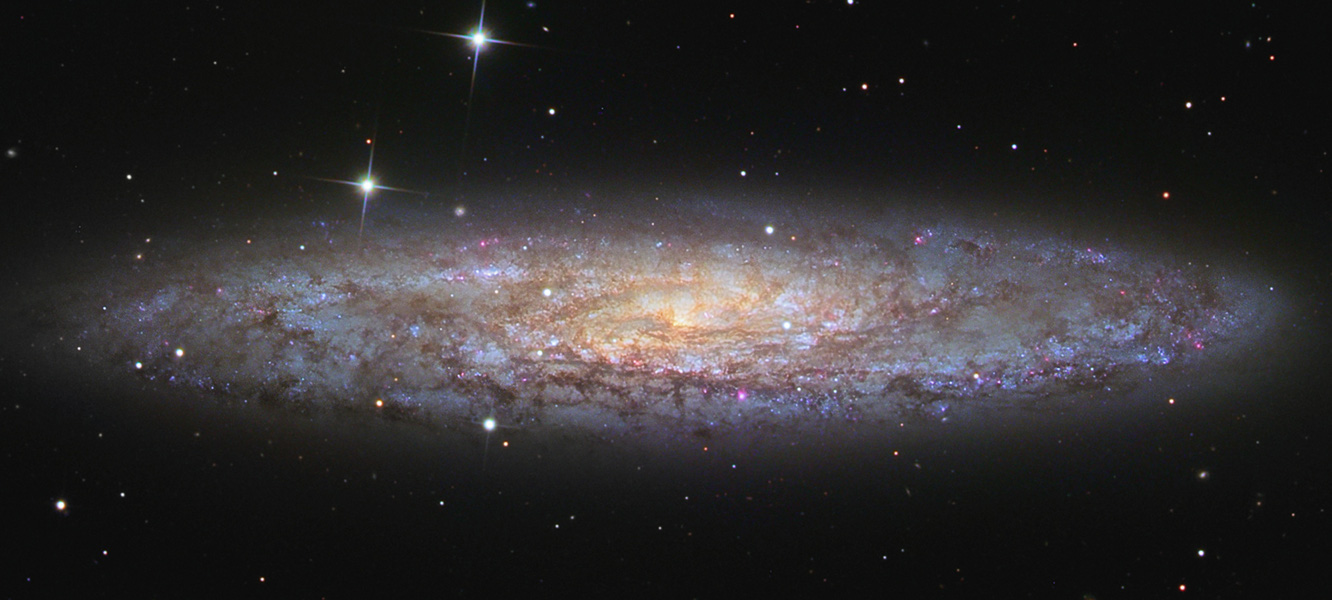
Shiny NGC 253 is one of the brightest spiral galaxies visible, and also one of the dustiest. Some call it the Silver Dollar Galaxy for its appearance in small telescopes, or just the Sculptor Galaxy for its location within the boundaries of the southern constellation Sculptor. Discovered in 1783 by mathematician and astronomer Caroline Herschel, the dusty island universe lies a mere 10 million light-years away. About 70 thousand light-years across, NGC 253 is the largest member of the Sculptor Group of Galaxies, the nearest to our own Local Group of Galaxies. In addition to its spiral dust lanes, tendrils of dust seem to be rising from a galactic disk laced with young star clusters and star forming regions in this sharp color image. The high dust content accompanies frantic star formation, earning NGC 253 the designation of a starburst galaxy. NGC 253 is also known to be a strong source of high-energy x-rays and gamma rays, likely due to massive black holes near the galaxy's center. Take a trip through extragalactic space in this short video flyby of NGC 253. via NASA http://ift.tt/2pvMXch

Wednesday, March 21, 2018

Camera Orion


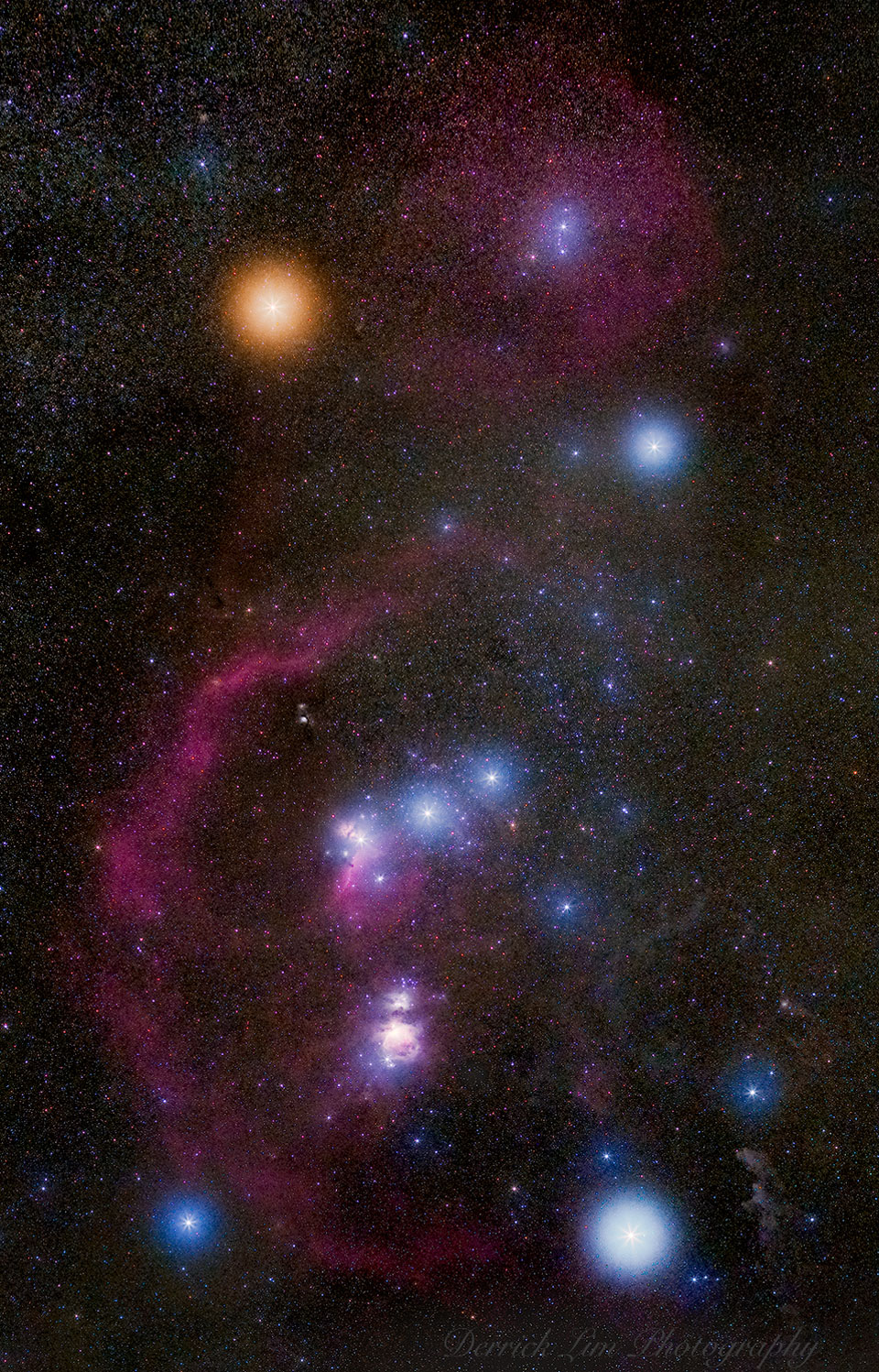
Do you recognize this constellation? Although it is one of the most recognizable star groupings on the sky, Orion's icons don't look quite as colorful to the eye as they do to a camera. In this 20-image digitally-composed mosaic, cool red giant Betelgeuse takes on a strong orange tint as the brightest star at the upper left. Orion's hot blue stars are numerous, with supergiant Rigel balancing Betelgeuse at the lower right, and Bellatrix at the upper right Lined up in Orion's belt are three stars all about 1,500 light-years away, born from the constellation's well-studied interstellar clouds. Below Orion's belt a reddish and fuzzy patch that might also look familiar -- the stellar nursery known as Orion's Nebula. Finally, just barely visible to the unaided eye but quite striking here by camera is Barnard's Loop -- a huge gaseous emission nebula surrounding Orion's Belt and Nebula discovered over 100 years ago by the pioneering Orion photographer E. E. Barnard. via NASA http://ift.tt/2GRtZp2

Tuesday, March 20, 2018

Chicagohenge: Equinox in an Aligned City


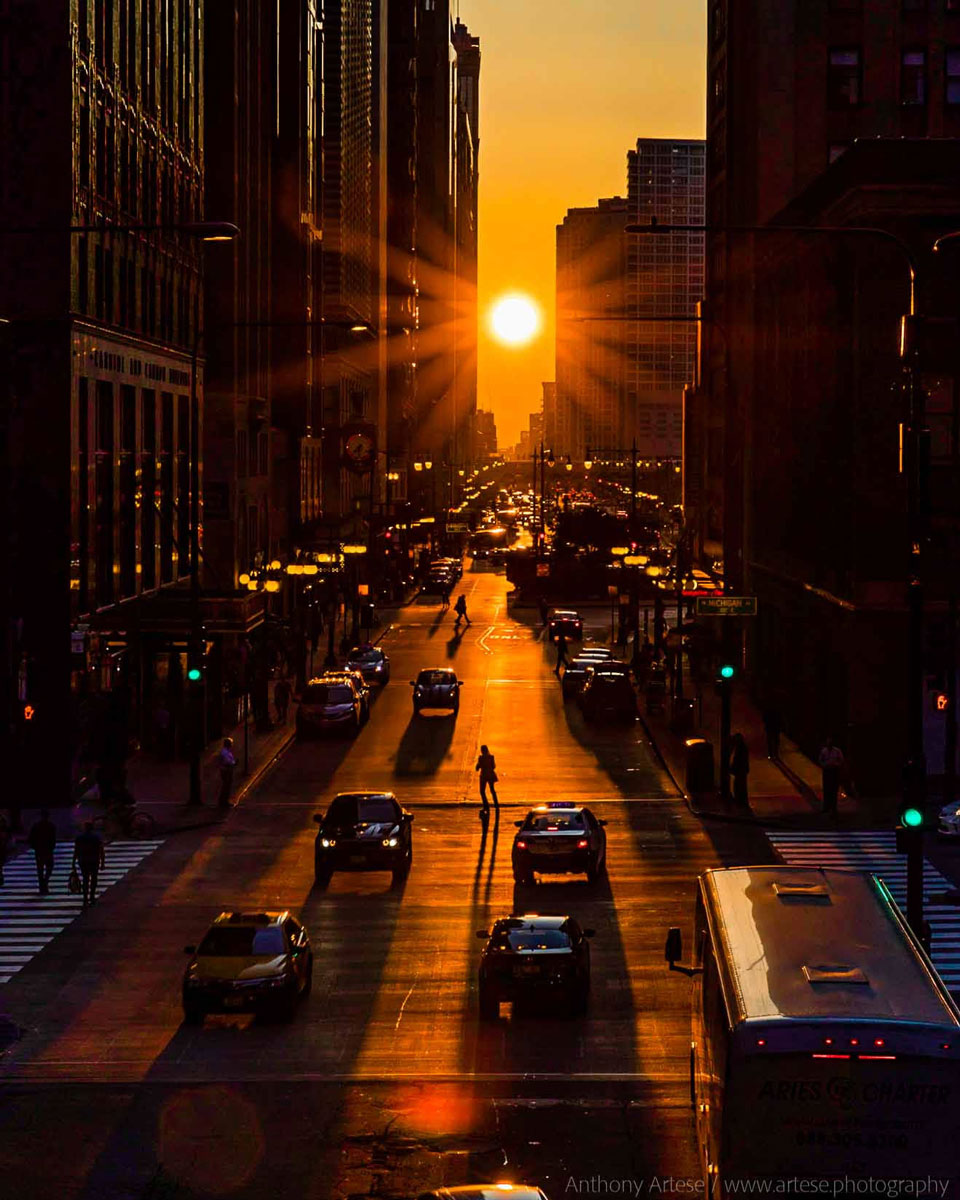
Sometimes, in a way, Chicago is like a modern Stonehenge. The way is east to west, and the time is today. Today, and every equinox, the Sun will set exactly to the west, everywhere on Earth. Therefore, today in Chicago, the Sun will set directly down the long equatorially-aligned grid of streets and buildings, an event dubbed #chicagohenge. Featured here is a Chicago Henge picture taken during the last equinox in mid-September of 2017 looking along part of Upper Wacker Drive. Many cities, though, have streets or other features that are well-aligned to Earth's spin axis. Therefore, quite possibly, your favorite street may also run east - west. Tonight at sunset, with a quick glance, you can actually find out. via NASA http://ift.tt/2ppmw8c